01
Potential Cost Savings
Comparable modular construction is often cited at roughly 10–20% less for the home itself. Total project savings vary once land, site work, utilities, permits, foundation, delivery and finishing are included.
 A smarter path to a custom home
Serving the New York Tri-State Area and specializing in Long Island, HomeStar Custom Homes combines personalized design with precision factory construction to deliver a high-quality home that is built to local codes, set on a permanent foundation and finished to feel entirely your own.
Modular construction moves much of the building process into a controlled indoor environment, helping reduce delays, waste and uncertainty while preserving the look, comfort and permanence of a site-built home.
Comparable modular construction is often cited at roughly 10–20% less for the home itself. Total project savings vary once land, site work, utilities, permits, foundation, delivery and finishing are included.
Your home can be built in the factory while foundation and site work move forward at the same time, substantially shortening the overall schedule.
Construction in a climate-controlled facility protects materials from prolonged exposure to rain, snow and moisture while supporting consistent inspections.
Choose layouts, finishes, exterior styles and room configurations that fit your property, lifestyle, taste and budget.
Factory planning, repeatable processes and bulk material purchasing can reduce waste and improve overall construction efficiency.
A modular home is not a mobile home. It is assembled on a permanent foundation and must comply with applicable state and local building requirements.
Modular construction brings the structure of your home together in a controlled factory setting, where framing, insulation, wiring, plumbing and interior components can move through organized quality-control checkpoints before delivery.
Repeatable processes help promote consistency throughout the home.
Major portions of construction take place indoors, away from extended weather exposure.
The completed modules are transported, set and finished on your building site.
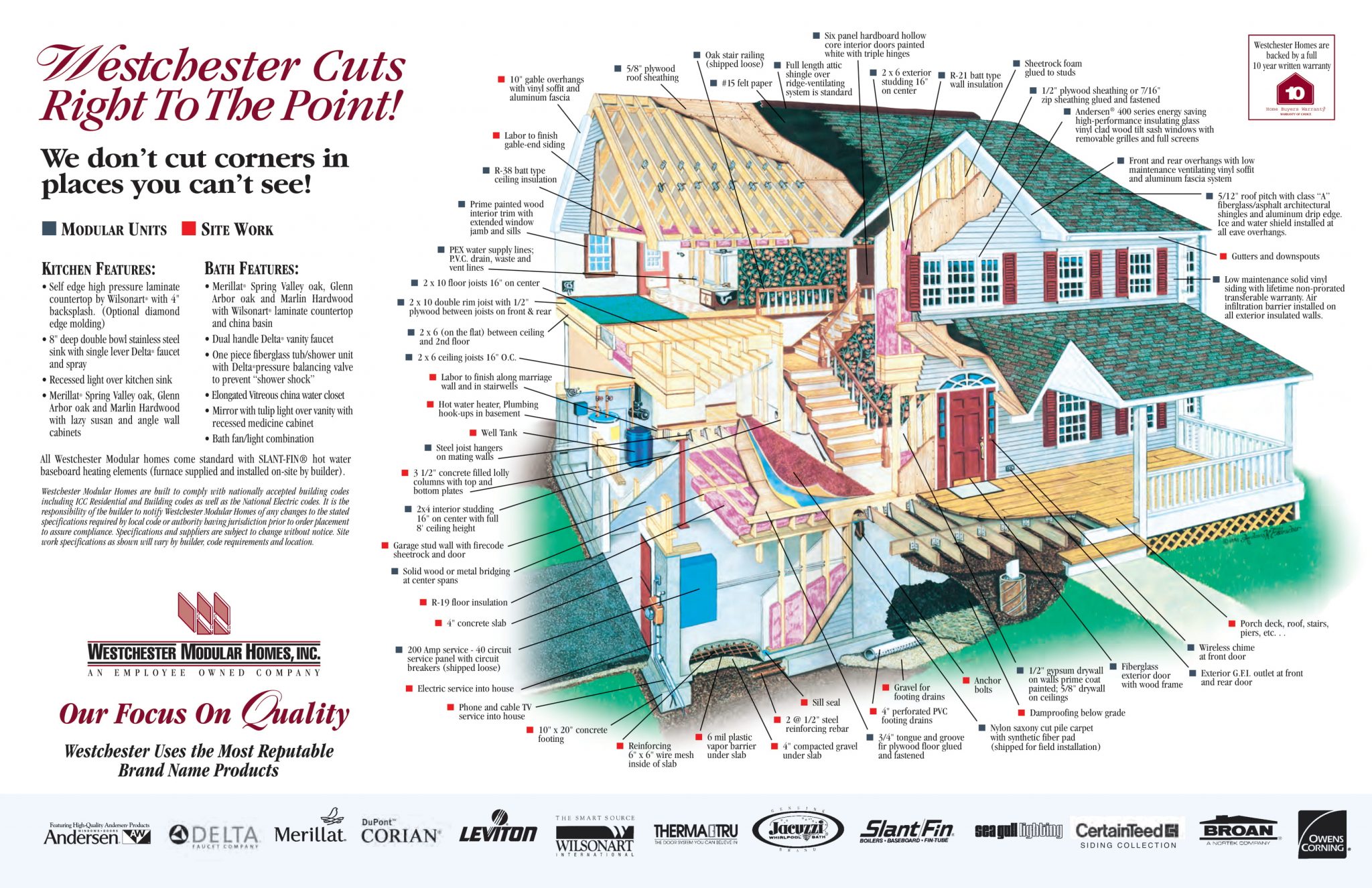
Illustrative only. Actual savings depend on design complexity, materials, labor market, transportation distance, site conditions and the scope included in each estimate.
Traditional stick-built homes and modular homes can both deliver beautiful, durable custom residences. Modular construction gives more homeowners the opportunity to create a personalized home with the potential for meaningful savings and a shorter, more predictable build schedule.
Both methods can produce high-quality homes designed for long-term ownership.
Modular sections are produced indoors and then transported for final assembly on site.
Parallel factory and site work can reduce downtime and weather-related delays.
Every project is different, but a clear process helps keep decisions, pricing and timing organized from the beginning.
We discuss your goals, budget, preferred style, property and approximate timeline.
Refine the floor plan, exterior, finishes, features and key specifications.
The home is constructed indoors while permitting, foundation and utilities progress on site.
Modules are delivered and set, followed by connections, final finishes and inspections.
No. A modular home is built in sections, transported to the property and assembled on a permanent foundation. It is designed to comply with the applicable building codes for its location.
Industry estimates frequently cite approximately 10–20% savings for comparable construction. On a complete turnkey project, the percentage can be lower because site work, utilities, foundation, delivery, permits and exterior improvements still apply.
Yes. The degree of customization depends on the manufacturer, engineering requirements, transportation limits, local zoning and your budget, but homeowners can typically personalize layouts, elevations, finishes and many architectural details.
Not inherently. Factory construction can improve consistency by using repeatable processes, protected materials and multiple quality-control checkpoints. Final quality still depends on the builder, manufacturer, specifications and installation team.
Land, demolition, excavation, foundation, utilities, septic or sewer, permits, delivery, crane work, garages, porches, driveways, landscaping and certain interior or exterior finishes may be separate. HomeStar can help clarify the full project scope.
Start with a simple conversation about your property, goals and budget. We will help you understand whether modular construction is the right fit for your project.
Request Your Consultation